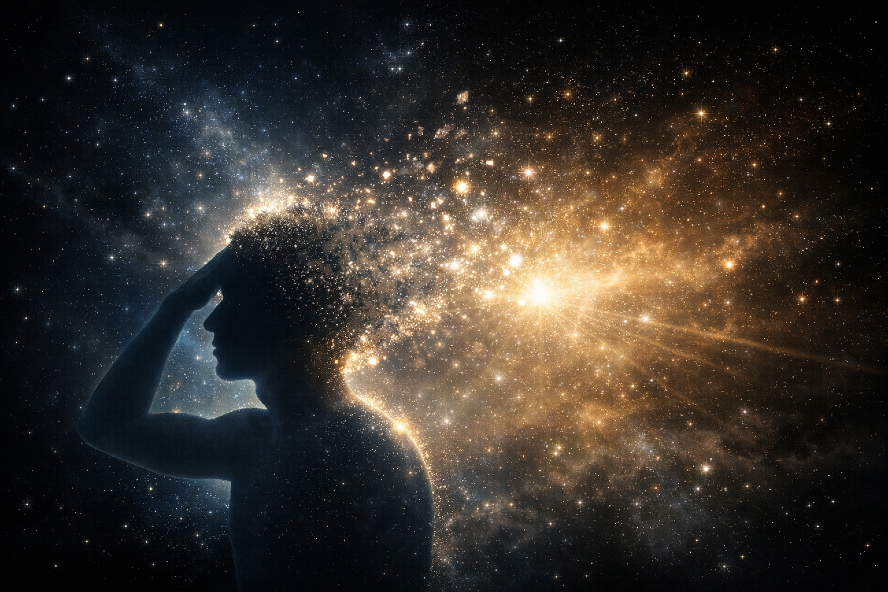
When the Circle Is Not Wide Enough
On Neurodivergence, Inclusion, and the Kinds of Minds We Still Leave Behind
A follow-up to Why Intelligence Is Not What We Think It Is
In my last post on neurodivergence, I wrote about how intelligence is far broader than what we have been taught to measure. Image-based thinking, relational knowing, variable attention: not deficits, but different ways of being human that our narrow frameworks have systematically undervalued.
That piece was, at its heart, an argument for expansion. For widening the lens.
But lately I have been sitting with a question that presses against that expansion from the inside:
How wide does the circle of acceptance actually go?
The Progress We Have Made — and Genuinely Should Celebrate
Something real has shifted in recent years. ADHD, autism, dyslexia, sensory processing differences — these are increasingly framed not as disorders to be corrected but as different cognitive styles with their own strengths. Schools are slowly catching up. The corporate world is starting to value neurodivergent traits. AuDHD-Coaching is broadening its tools.
This is meaningful progress. It represents a genuine reckoning with how much human potential we have been discarding because it did not fit a narrow template.
And yet.
When I look carefully at where the circle of acceptance stops — where the tolerance quietly ends — I find it stops at a very particular edge.
The Edge of the Circle
The same people who advocate passionately for neurodivergent inclusion, who understand that not everyone thinks or learns the same way, can become quietly dismissive — or openly contemptuous — when the difference in question is not cognitive, but intuitive. Spiritual. Felt. Extrasensory Perception (ESP)
People who sense things that are not yet empirical. Those who move through the world with a kind of knowing that does not arrive through analysis. Who orient themselves by image, symbol, and embodied perception rather than by linear argument.
This too is a form of neurodivergence. It is a different relationship to reality — not a failure of reason, but a different organ of knowing.
And our circle of acceptance does not reliably include it.
A History Worth Naming
This is not new. The exclusion of intuitive and spiritually sensitive people is ancient, and its history is not gentle.
Those who were attuned to the unseen — healers, dreamers, those who read the body and the land — were for centuries not merely dismissed but actively destroyed. Burnt. Driven out. The violence was systematic, and it was specifically directed at this kind of knowing.
We do not burn people anymore. But I wonder sometimes whether the fear has simply become more sophisticated. Whether it has transformed into an intellectual rejection — into the language of irrationality, of unscientific thinking, of being manipulable or naive.
The mechanism is the same, even when the stakes are lower: what we cannot categorise, we make invisible. What we cannot measure, we dismiss. What we cannot understand, we call dangerous.
What Healing Has Always Known
This matters in my clinical work, and not abstractly.
Peter Levine, in his decades of work with trauma and the nervous system, notes something important in Waking the Tiger: across cultures and throughout human history, trauma has been healed in community, through ritual, through the body, through practices that held the spiritual and the biological together as one. The Western institutionalisation of healing, clinical and evidence-based, severed something that was never meant to be severed.
What was lost was not just a method. It was an understanding: that healing happens in the presence of the whole person, not just the thinking person. That there are dimensions of human experience — the felt sense, the symbolic, the communal, the sacred — that exceed the clinical framework.
Carl Rogers expanded on this especially in his later work, e.g. A Way of Being. His insistence on the therapeutic relationship as the primary agent of change, on the irreducibility of genuine encounter, the intuitive and spiritual wisdom appearing in groups pointed toward something that cannot be fully systematised. Something that lives between people, not inside a technique.
The Inconsistency at the Heart of Inclusion
I want to name this gently but directly, because I think it matters:
There is an inconsistency at the heart of much contemporary discourse around neurodivergence.
We have expanded our understanding of cognition. We accept that intelligence is plural, that attention is variable, that thinking can be image-based, relational, non-linear. These are good developments.
But when a person says I know this not through analysis but through felt sense, when they navigate by intuition, by image, by a kind of perception that is not easily evidenced, they are often met not with curiosity but with concern. Or with that particular form of polite scepticism that amounts to the same thing.
And yet: if intelligence is truly plural, why would ways of knowing be singular?
Rigour and Mystery Together
I want to be clear about what I am not arguing. I am not arguing against evidence or rigour. I hold Enlightenment values. I understand why, in a world full of manipulation and misinformation, people guard carefully against what cannot be verified.
Parts of me share those concerns.
But I am asking for something more: the willingness to hold the tension between rigour and mystery. Between evidence and intuition. Between what can be measured and what can only be sensed.
The word I keep returning to is bridging. Not a rejection of data or science. Not mysticism for its own sake. But a bringing-back-together of what has been artificially separated: the cognitive and the felt sense, the rational and the intuitive, the individual and the communal, the clinical and the sacred.
What Acceptance Actually Requires
Genuine acceptance of neurodivergence cannot stop at the edge of the measurable.
It has to include the person who processes the world through image and felt sense, who carries knowledge in their body before it arrives in words. The person who knows what is happening in a room before anyone else. The person whose way of knowing is not less rigorous, but differently rigorous, operating through a different instrument.
This is not a call to abandon discernment. It is a call to extend the same acceptance we have (rightly) begun extending to different cognitive styles to different perceptual styles as well.
Because if we do not, we are still drawing a circle. We have just moved the line.
An Invitation
The question I posed in my last piece was: how does this person experience the world?
That remains the right question.
But perhaps we need to add one more: are we willing to take seriously a way of experiencing the world that we do not yet have language for?
That willingness — to stay curious rather than dismissive in the face of what we cannot categorise — might be one of the most important capacities we can cultivate right now. Not just as therapists, not just as educators.
As humans extending full recognition to other humans.