
When Attachment Takes Everything
Why Some People Never “Started Dating” In the 1950s, psychologist Harry Harlow conducted a series of now well-known—and deeply troubling—experiments with infant rhesus monkeys. The young monkeys formed attachments to artificial “mothers,” even when these figures were cold, mechanical, and at times actively harmful. Some of these “mothers” rejected the infants by shaking them off,…

When Performance Becomes a Measure of Lovability
There is a quiet but powerful link between performance anxiety and the feeling of not being truly lovable. At first glance, performance anxiety seems to be about pressure: deadlines, expectations, competition, and the fear of not doing well enough. In a rapidly changing world, shaped by uncertainty and developments like artificial intelligence, this pressure can…

Why Intelligence Is Not What We Think It Is
A relational perspective on Wahnsinnig intelligent by André Frank Zimpel What if intelligence is not what we’ve been taught to value? In therapy and education alike, many people struggle—not because they lack intelligence, but because their way of thinking, feeling, and learning does not fit narrow definitions of what intelligence is supposed to look like.…
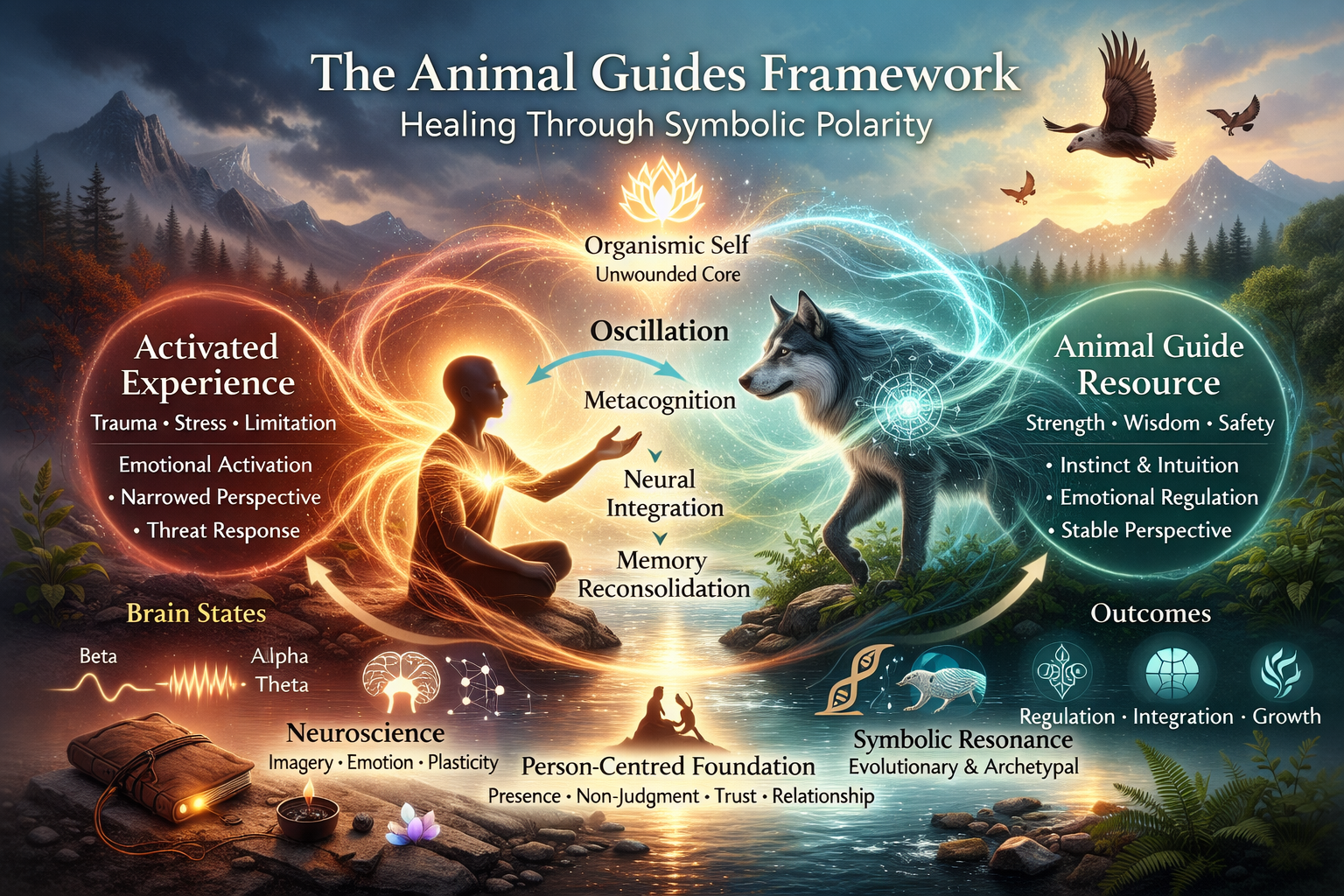
Working with Animal Guides: Metacognition, Experience, and the Relational Field
The Animal Guides Encounter can be understood as an applied extension of the principles articulated throughout this paper. It translates person-centred philosophy, relational depth, and the formative tendency into a concrete experiential structure—one that allows individuals to encounter themselves in a new way. At its core, the animal guides encounter introduces a second point of…

A Way of Being as Living Theory
This article explores Carl Rogers’ "A Way of Being" as a living, relational framework